A windshield seems like a simple pane of glass until a crack spreads across it while you’re driving through Sanford at 50 miles an hour. Glass keeps weather and debris out, but more importantly, it contributes to the structure of the vehicle, supports airbag deployment, and preserves sightlines. When it fails, you notice. When it’s repaired correctly, you shouldn’t notice at all.
I’ve spent years around shops that handle sanford auto glass replacement and driveways where mobile technicians complete sanford windshield replacement in less than an hour. The best work feels routine in the moment, yet it’s the difference between a safe cabin and a risky compromise. The goal here is to explain how to make the right call when you see damage, what to expect from sanford auto glass repair, and how to avoid pitfalls that shorten the life of your new glass.
The moment you see damage
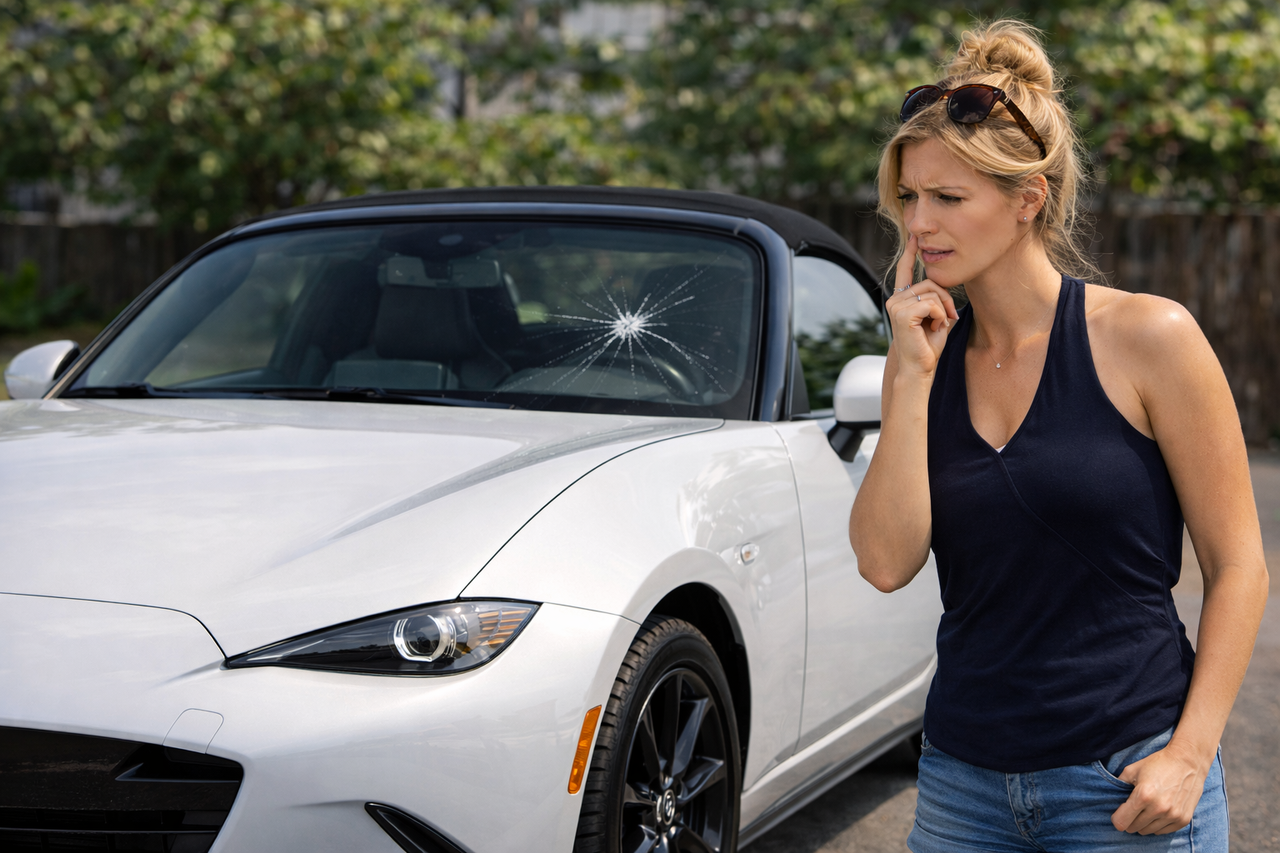
A rock ping on 417 near the Lake Jesup bridge is common. Sometimes you get a pea-sized divot that barely shows. Other times, a starburst appears and seems to grow before your eyes. The first decision is whether you can keep driving for the day or need immediate attention.
The safe judgement is simple. If the crack obstructs your direct line of sight, if it reaches the edge of the glass, or if you see more than one long crack radiating from a point, treat it as urgent. Modern laminated windshields rely on the bond at the perimeter, so an edge crack can undermine the tensile strength. Even if the glass looks intact, the structure may be compromised.
If you’re looking at a small bull’s-eye or a short crack that hasn’t reached the edges, sanford windshield repair can often restore integrity without replacing the panel. Rock chip repair sanford services use resin under pressure, curing with UV to stop spreading. Waiting a week can turn a clean repair into a full replacement, especially in Florida heat where cabin temperatures can swing 40 to 60 degrees in a day.
Repair or replace: draw the line with facts
Good shops don’t play guessing games. They measure and examine the damage and follow standards. As a practical rule that aligns with industry guidance:
- Short cracks under about 6 inches that don’t reach the edge, and chips under a quarter in diameter, are often repairable.
- Damage in the driver’s primary viewing area is sometimes technically repairable but often not recommended because resin can leave minor optical distortion.
- Multiple cracks, long cracks, or anything that compromises the inner plastic interlayer calls for replacement.
Repairs take 20 to 40 minutes. The technician cleans the break, applies a vacuum and pressure cycle to inject resin, then cures it under UV. Visual improvement ranges from 50 to 90 percent, but the main goal is stopping the spread and restoring strength. You may still see a faint mark. Replacement, by contrast, aims for a like-new windshield that meets the original optical clarity and structural requirements.
Why the windshield matters to safety
People think of windshields as rain guards. In reality they play a big role in a crash. In many vehicles the windshield accounts for a sizable portion of roof crush resistance during a rollover. It also forms a backstop for front airbags, guiding them toward the occupant. If the glass isn’t bonded correctly, the bag can push the glass out. The occupant then meets the airbag late or at the wrong angle, increasing injury risk.
That’s why the adhesive matters as much as the glass. Quality urethane adhesives tested for crash performance reach safe drive-away strength in a defined window, often between 30 minutes and a few hours depending on temperature, humidity, and whether the car has traditional or advanced airbags. If a tech says you can drive right away on any replacement with any conditions, be cautious. Proper sanford auto glass replacement includes a cure time briefing. It’s not a suggestion, it’s part of the safety system.
What to expect during sanford windshield replacement
Good sanford windshield replacement follows a sequence that balances care and efficiency. The process is straightforward but demands attention to detail.
The technician will inspect your vehicle, note any preexisting scratches or dings, and verify the exact glass part number. If your car has advanced driver assistance systems, the correct windshield includes specific brackets, acoustic layers, or camera view windows. Not all glass is equal, even if it fits.
Trim and cowling come off next. The old windshield is cut out along the urethane bead using a cold knife, wire system, or power tool designed for this task. With the glass out, the tech cleans the pinch weld, removing old adhesive down to a thin, uniform layer. Bare metal gets a primer. Rust, if present, must be addressed before proceeding. Skipping rust treatment is a fast way to create leaks months later.
A new urethane bead is applied in a single, continuous triangle shaped pass. This bead height sets the glass position, so an experienced hand keeps consistent pressure and pace. The new windshield goes in with suction cups and alignment stops if used, then gets seated firmly. Excess squeeze-out is trimmed, and the tech re-installs trim and cowl pieces. Wipers are reindexed and tested. Finally, they’ll give you that critical safe drive-away time.
Expect the full on-site visit to take 60 to 90 minutes in typical conditions. Add calibration time if your vehicle has camera-based ADAS.
ADAS recalibration: the step many owners forget
A growing share of vehicles in Sanford carry forward-facing cameras behind the windshield. Lane-keeping, automatic emergency braking, and adaptive cruise control depend on those cameras. Windshield replacement changes the camera’s relationship to the road by a few millimeters, which can skew the field of view.
After sanford auto glass replacement, calibration restores the correct alignment. There are two types. Static calibration uses targets placed at precise distances and heights inside a controlled bay. Dynamic calibration requires a drive on well-marked roads at a specified speed for a set distance. Some vehicles need both.
Shops that do sanford mobile windshield repair can handle dynamic calibration on the road if they carry the right tools, though static calibration usually requires a controlled space. Costs vary widely by make, often a few hundred dollars. Insurance typically covers it when the windshield replacement is approved, but ask specifically. Skipping calibration can leave you with driver assistance features that seem to work until they misinterpret a situation when you need them most.
Mobile or in-shop: how to choose
Mobile auto glass sanford services are convenient. A good mobile setup can match shop-quality results for many vehicles, especially in fair weather. I’ve watched techs replace a cracked windshield Sanford driveway-side with meticulous care, using mobile stands and calibrated glue guns set to temperature. There are times, though, when the shop is the smarter pick.
If your car needs static ADAS calibration, a controlled bay is necessary. If weather is wet, too windy, or extremely hot, urethane cure times and debris control get tricky outdoors. If there’s any sign of rust around the frame, a shop has better tools to treat and seal. Think of it as a spectrum. For a straightforward sanford windshield repair or basic replacement, mobile is fine. For complex vehicles, nonstandard glass, or body issues, schedule in-shop.
Insurance, deductibles, and Florida specifics
Florida has historically been friendly to auto glass claims, but policies change and details matter. Many comprehensive policies cover windshield repair or replacement with little to no out-of-pocket cost. Rock chip repair sanford often comes at no cost to preserve safety and avoid larger claims later. That said, coverage levels vary by provider and plan.
Before you schedule, call your insurer or use the shop’s claim support if they offer it. Have your policy number, VIN, and the date the damage occurred. Ask directly about your deductible for glass, how ADAS calibration is handled, and whether OEM glass is authorized for your vehicle. If you drive a luxury brand or a vehicle whose driver assistance system is sensitive to glass optics, OEM or OEM-equivalent can make a difference.
Watch out for high-pressure solicitation. If someone approaches you in a parking lot promising a free windshield “today only,” keep your guard up. Reputable sanford auto glass repair shops are easy to find without the hard sell, and you have the right to choose who does the work.
OEM, OEE, and aftermarket glass, explained without jargon
You’ll hear three terms. OEM means the glass comes from the original manufacturer that supplies the automaker, branded accordingly. OEE refers to parts made by the same supplier to the same specs, but without the automaker logo. Aftermarket runs the gamut. Some pieces match the spec well, others don’t.
For vehicles with heated wipers, heads-up display, rain sensors, acoustic layers, or complex ADAS camera windows, I lean toward OEM or high quality OEE. I’ve seen aftermarket pieces that introduced wavy distortion in the driver’s view, barely visible at first, yet maddening on long drives. On simpler vehicles, a reputable aftermarket glass from a known maker can be cost effective. A good shop will tell you what they’re installing, not just say “it’s fine.”
The small stuff that prevents big problems
Leaks and wind noise don’t show up immediately. They often appear after a few heavy storms or highway runs. Two technician habits make the biggest difference: thorough pinch-weld prep and proper bead height. The former ensures adhesion, the latter ensures the glass sits at the right depth so the cowl seals properly and the trim fits flush. Shortcuts here show up later as whistles at 60 mph or a damp passenger carpet after rain.
Don’t slam doors hard for a day after replacement. The cabin pressure spike can disturb curing adhesive. Avoid power car washes for at least 24 hours. If a tech says the drive-away time is 30 minutes, that does not mean the adhesive has reached full cure. It means it’s safe for careful driving under normal conditions. Full cure can take several hours to a day depending on the urethane.
Sanity checks before the technician leaves
A quick walkaround and a couple of checks will save you a return visit.
- Inspect the glass for distortion by looking at straight lines, like a fence or building edge, from the driver’s seat. Move your head slightly side to side. Waviness means trouble.
- Verify the ADAS calibration indicator. If your vehicle shows status messages, make sure there are no errors. If dynamic calibration is pending, confirm the plan.
- Test the rain sensor, if equipped, and run the defroster to ensure heated elements function.
- Spray or mist the windshield edges lightly and check for leaks. A good tech often does this unprompted.
- Confirm wiper park position and that trim sits flush without gaps.
These checks take two minutes and can catch issues that are easy to fix on the spot.
When repair makes more sense than replacement
Sanford windshield repair has a few underrated benefits beyond cost. First, the original factory seal remains intact. If your vehicle is a few years old but still tight and quiet, preserving that OEM bond is valuable. Second, repair tends to be faster and keeps the car available with no calibration step. Third, many insurers waive deductibles for repair.
The trade-off is cosmetic. Even an excellent repair can leave a faint blemish. If the mark sits low and out of your sightline, you won’t care by the second day. If it lands right where you fix your eyes during a morning commute on 17-92, it will annoy you. That’s when replacing might be worth it even if a repair could technically stop the crack.
Side and rear glass: different materials, different rules
Windshields are laminated. Side and rear glass are usually tempered, so when a rock or break-in shatters a side window, you get the familiar cube-like pellets everywhere. There’s no repairing tempered glass, only replacement. Sanford car window replacement is a quicker job than a windshield in most cases, but the cleanup matters. Hidden glass can lodge in door drains and window tracks. A careful tech will vacuum the door cavity, blow out the track, and check the regulator and seals.
Back glass on some SUVs includes integrated antennas or defroster grids. If the new piece doesn’t line up electrically, your radio reception or defrost can suffer. Make sure the shop tests those features. Also, when rear glass on a hatch breaks, it can leave small shards in cargo trim and the weatherstrip that later scratch the new panel. Good shops vacuum, then wipe all contact surfaces.
Choosing a sanford auto glass repair partner
Reputation in this niche isn’t about flashy lobbies. It’s about how few returns a shop sees and how they handle the ones that happen. Look for technicians who talk you through cure times without being prompted. Ask whether they use one-time-use cowl and clip parts when required by the manufacturer, not just the glass. If your vehicle has calibration needs, ask if they do it in-house or partner with a calibration center, and how they document it.
Mobile auto glass sanford providers should arrive with clean tools, a mats-first mindset to protect your interior, and clear labeling on the adhesive and primers they use. I like seeing batch numbers and cure charts. It signals a process, not improvisation.
Price shopping has limits. If one quote is dramatically lower than the rest, it often reflects the glass source and adhesive quality. Saving fifty dollars and getting a wavy panel or wind noise is no bargain.
Weather and Florida heat: the invisible forces
Sanford’s weather accelerates small problems. Afternoon storms push water against seals. A windshield that’s slightly out of height can funnel spray into the cowl area, soaking cabin filters and encouraging mildew odors. Heat makes minor chips propagate. A parked car can see glass temperatures well above 140 degrees. Then you crank the AC to full cold. The sudden gradient can send a small chip sprinting across the passenger side.
If you get a chip, cover it with clear tape as a temporary dust barrier until you can schedule rock chip repair sanford. Don’t use duct tape or anything with fibers that can contaminate the resin process. Avoid blasting defrost on high heat or AC on full cold directly at the chip before repair.
Aftercare and long-term durability
A well-installed windshield should last as long as the original. Durability hinges on the bond. You can help by keeping the cowl drains clear of leaves and debris so water doesn’t pool. Replace wiper blades at appropriate intervals, often every 6 to 12 months, so they don’t chatter or scratch the glass. Harsh chemical cleaners aren’t necessary. A good glass cleaner or diluted isopropyl works. For hydrophobic coatings, follow the product’s recommended reapplication schedule and avoid applying in the ADAS camera’s critical view area unless the manufacturer states it’s compatible.
If you hear a new whistle at highway speeds, don’t wait. Wind noise often indicates a minor trim or molding issue that’s quick to correct if addressed early. Left alone, it can pull more air, which increases pressure on the bond line and can evolve into a leak.
Real-world scenarios from Sanford streets
A contractor with a mid-size pickup took a pebble on SR-46, dead center of the driver’s area. The chip looked small, but by the next morning, a hairline fracture reached upward. He chose repair to keep working that day. The resin sealed it, but the faint mark sat in his main viewing cone and caught the sun every afternoon. Two weeks later he replaced the windshield anyway. The lesson wasn’t that repair failed, but that location matters as much as size. When a blemish lands where your eyes rest, replacement saves annoyance.
Another case involved a late-model SUV with a camera-based lane system. The owner went with an economical replacement that didn’t include full calibration. The car seemed fine around town. On I-4, lane centering wandered. A proper static calibration at a shop with a target wall fixed it in an hour. The tech showed the before and after alignment values. It wasn’t a defect in the glass, just a skipped step.
A third example: a sedan with a barely visible rust line at the top edge of the pinch weld, uncovered after the old glass came out. The mobile tech paused the job and rescheduled for the shop, where they removed the rust, primed the metal, front windshield replacement sanford then installed the new glass. Two extra days kept the car dry over the next rainy season. Had they ignored it, the owner would have chased a leak for months.
Tying it together: your decision framework
When you see a cracked windshield Sanford roads didn’t help cause, focus on three decisions. First, can it be repaired without compromising sightlines or strength? If yes, handle it promptly and keep the factory seal. Second, if you need replacement, match the glass quality to the vehicle’s needs and confirm ADAS calibration. Third, pick the setting, mobile or shop, that matches the complexity of the job and the day’s weather.
Sanford mobile windshield repair is a strong option for routine damage and tight schedules. For vehicles with camera systems, head-up displays, or rust at the frame, a shop visit is worth the logistics. Either way, insist on clear explanations about adhesives, cure times, and tests performed before you drive.
A windshield should be a quiet partner, not a source of drama. With the right sanford auto glass replacement or repair, it goes back to being invisible, which is exactly where it belongs.
Leave a Reply