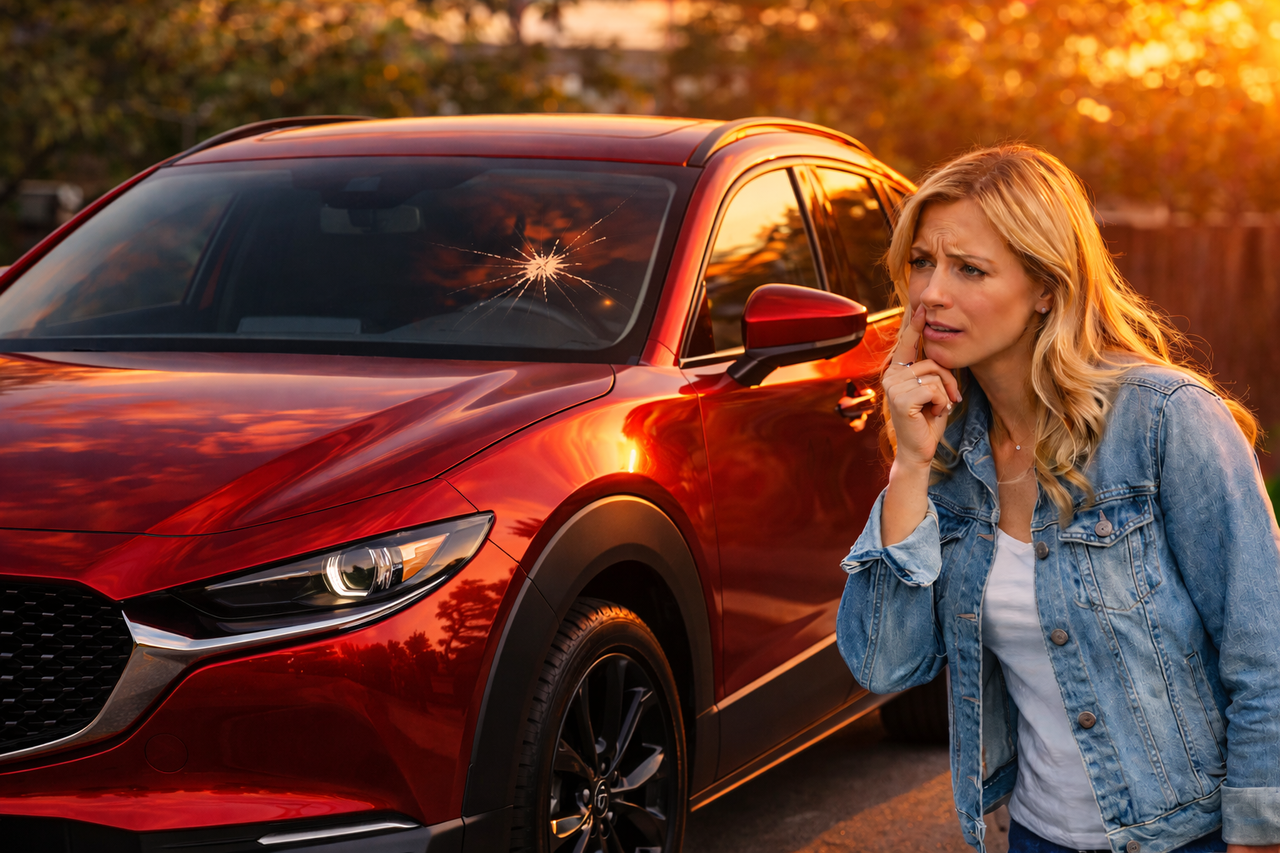
Every driver in Charlotte has a glass story. A rock flips up on I‑77 near Remount Road, and a windshield chip becomes a spidering crack by the time you roll into the office. You pull up your phone, search for a quote, and minutes later you have three prices that look similar at first glance. Then the caveats hit: fees, exclusions, mysterious acronyms, optional calibrations. The difference between a smooth repair and a frustrating week often hides in that fine print.
I’ve worked with body shops, fleet managers, and independent installers around Mecklenburg County. The patterns repeat. The best priced quote is not always the best value, and the most expensive number doesn’t guarantee the right glass, the right calibration, or the right warranty. If you learn how to decode a Charlotte Windshield Quote, you can save real money and avoid headaches about safety systems, leaks, and insurance hassles.
What a quote should actually cover
A proper windshield estimate needs to answer three questions: what glass you’re getting, what work is included, and who stands behind it. Many quotes answer the first with a vague brand name and the third with a bold “lifetime warranty” claim. The second is where the surprises live.
Start with the glass. The industry splits into OEM, OEE, and aftermarket. OEM is original equipment manufacturer, the exact brand the automaker used on your car at the factory. OEE refers to the same manufacturer making glass to similar specs, usually without the automaker’s logo. Aftermarket encompasses numerous brands building to fit, not necessarily to the exact optical tolerances. On a basic crossover with no advanced driver assistance features, high quality aftermarket can serve you well. On a late model sedan with rain sensors, acoustic interlayers, and a heated park area for wipers, cutting corners can introduce wind noise, fogging around the sensors, or camera calibration drift.
What work is included goes beyond swapping glass. Most modern vehicles in Charlotte, from South End commuters to Concord and Pineville fleets, carry ADAS cameras mounted near the rearview mirror. After any windshield replacement, those cameras usually require recalibration. Some vehicles accept dynamic calibration carried out on the road with a scan tool. Others demand static calibration with printed targets, level floors, and measured distances. That means shop space, time, and additional cost. If a quote glosses over calibration, or treats it as an optional add‑on, you may be the one calling around to find an alignment rack with targets after the install. I see this especially with out‑of‑state glass call centers that subcontract locally.
As for who stands behind the work, the strongest warranties are simple: lifetime against leaks and workmanship defects, explicit coverage for stress cracks that appear without impact within a defined short window, and clear instructions for warranty claims. The gray area arises when the warranty excludes anything related to sensors, to molding reuse, or to “customer’s provided part.” Look for local street addresses and service guarantees tied to the Charlotte area. A national call center may be fine, but you want a real technician who will show up in Matthews or Huntersville when you need a leak fixed after the next storm.
The Charlotte factor: weather, roads, and insurers
Local conditions shape both what breaks windshields and how shops quote them. Summer heat bakes dashboards and accelerates small chips into long cracks. Morning thunderstorms can expose a poor urethane cure if a mobile installer rushed the job. On I‑485 widening zones, aggregate from trucks peppers glass. If you drive 485 or 77 daily, your risk profile pushes the math toward repair policies and stronger warranties.
Insurers matter too. North Carolina does not mandate zero deductible glass coverage the way some states do. In Charlotte, many drivers carry comprehensive with a deductible between 250 insurance windshield replacement Charlotte NC 28287 and 500 dollars. That’s a pivotal threshold. If the job costs 375 with quality glass and correct calibration, filing a claim with a 500 deductible leaves you paying out of pocket while adding a claim to your record. If a shop knows your deductible, an “insurance price” can creep up while the “cash price” remains aggressive. Ask for both. A reputable Charlotte Auto Glass company will put those numbers side by side and explain how steering works when you call your insurance carrier. You have the right to choose your shop, even if the insurer recommends a preferred vendor.
Line items that deserve your attention
The short version of most quotes looks like this: glass, labor, calibration, moldings, fees. The long version includes specifics that can change the job quality. When I review a Charlotte Windshield Quote for a client, I scan for these items and how they’re worded:
-
Glass specification: OEM brand name and part number, OEE brand, or aftermarket brand. If the car has a heads‑up display, acoustic glass, solar coating, heated area, or condensation sensor, the part number must match those features. “Fits all” language is a red flag.
-
ADAS calibration: dynamic, static, or both. Where it will occur, how long it takes, and whether the shop has its own targets. If they subcontract to a dealership, ask who schedules it and how the car gets there.
-
Moldings and clips: whether new moldings are included, especially on vehicles like Toyota Camry or Honda CR‑V where a brittle outer molding tends to warp. Reusing deformed trim to save 40 dollars can cause wind noise at highway speed.
-
Urethane and cure time: the adhesive brand and safe drive‑away time. Quality urethane can cure to a safe threshold in one to two hours at Charlotte summer temperatures, longer in colder weather. If a mobile installer tells you it’s safe to drive immediately, push back.
-
Fees and disposal: mobile service fees, glass disposal fees, shop supplies. None of these are inherently bad, but they should appear upfront rather than after the install.
These five bullets are a checklist that protects you from vague promises. When a shop spells them out clearly, it usually signals a professional operation that values repeat business in the Charlotte market.
How ADAS calibration drives cost and safety
Calibration is no longer an edge case. On recent model years, forward camera systems support lane keeping, adaptive cruise, and collision mitigation. A few degrees of misalignment can lengthen stopping distances or nudge the steering at the wrong moment. I have watched a technician in a South Tryon shop spend two hours leveling a vehicle and setting up targets because the floor sloped more than it seemed. He could have muscled through a dynamic calibration on the road, but the manufacturer’s service information called for static. That choice costs money and time, and it is worth every bit of it.
The tricky part for shoppers is that calibration prices vary wildly. I have seen quotes from 125 for a quick dynamic drive to 450 for static calibration in a dedicated bay, and higher when a dealer handles it. The right number depends on your vehicle and equipment. A Mazda CX‑5 often completes dynamic calibration with no drama. A Subaru with EyeSight may demand static targets. German makes push toward static as well, particularly when head‑up display and infrared cameras are involved.
When you read an Auto Glass Quote Charlotte providers send you, watch for bundling. If the quote shows one number for glass, installation, and calibration, ask for the calibration portion and method. Not to haggle, but to confirm the shop will complete it correctly. If you need a paper trail for insurance, you will want a calibration report printed or saved as a PDF with the VIN and pass result.
OEM, OEE, and aftermarket in practice
I have clients who insist on OEM glass for leased vehicles and cars under bumper‑to‑bumper warranty. That makes sense. Automakers can be sticky about non‑OEM parts if a problem arises later. On a five‑year‑old SUV with 70,000 miles, OEE quality can deliver the same optical clarity and sound insulation at a lower price. Aftermarket glass varies. Some brands match curvature and tint well, others introduce slight waves that a careful eye catches at dusk on the Plaza when streetlights streak.
Prices swing with this choice. A typical late model compact with a basic camera might see 350 to 450 for reputable aftermarket, 500 to 650 for OEE, and 700 to 1,000 for OEM, calibration included. Luxury makes or complex options nudge these bands up. If you get a suspiciously low quote for a car loaded with sensors, assume aftermarket glass and no calibration included unless proven otherwise.
Compatibility matters beyond optics. Rain sensors adhere to the glass with specific gels or pads. Acoustic glass uses a PVB interlayer to damp noise. Heads‑up display glass has a wedge to keep the display crisp. If your quote does not name these features, you risk mismatched parts and a second appointment.
Mobile service versus shop installation
Charlotte drivers love the convenience of a mobile install in a parking garage uptown or a driveway in Dilworth. That convenience depends on conditions. Urethane cures faster with heat and slower with cold and humidity. Wind brings dust that can contaminate the bond. ADAS calibration may not be possible in a tight parking deck.
A strong Charlotte Auto Glass provider will tell you when mobile is fine and when a shop visit produces better results. A mobile crew can handle many replacements in fair weather, especially straightforward cars. When a static calibration is required, a shop with a level bay, proper lighting, and targets is the right choice. If you insist on mobile in a case that demands static calibration, expect the vehicle to go to the shop after glass installation anyway. That doubles the logistics and risks miscommunication.
From a cost perspective, mobile service fees can add 25 to 75 dollars, sometimes more if your address is outside the usual service radius. That fee should appear on the quote. In return, you should get a clear appointment window, advance notice of delays, and a technician who uses seat covers and cleans up adhesive and glass chips.
The warranty maze, simplified
“Lifetime warranty” reads well on a website. The devil sits in the exclusions. Common carve‑outs include stress cracks, rust, body damage, off‑road use, and anything tied to sensors. Stress cracks create friction because the customer often sees a long, curved crack one day after the install and assumes it is the shop’s fault. Sometimes it is, especially if the glass was under stress due to improper setting or gaps in the urethane bead. Sometimes the body pinch weld was rusty, the day’s temperature swung hard, or a hidden impact point finally gave way.
A fair warranty draws a line between impact damage and installation defects. If a crack radiates from an obvious chip, that’s impact. If it creeps from the edge with no impact points, many shops will cover it within a short window, usually 30 days. Beyond that, they fear latent body issues they cannot control. As for leaks, a lifetime workmanship promise is reasonable, and a shop that handles clay water tests and reseals without argument earns my trust.
Calibration warranties rarely cover the sensors themselves. They typically guarantee the calibration pass, not the long‑term function of the camera. That is fair. If a warning light appears later due to a bumper sensor issue or wheel alignment drift, the glass shop didn’t cause it. Still, a good shop will recheck the calibration within that short window if you report a dash warning soon after the install.
Insurance coordination without the runaround
Most Charlottes drivers start one of two ways: they call the 800 number on their insurance card, or they call a local shop and ask if the shop can bill their insurer. Both paths work, but they feel different.
Insurer hotlines often steer callers to national preferred vendors. Those vendors may dispatch local technicians, sometimes excellent, sometimes rushed. The benefit is streamlined billing and predictable deductibles. The trade‑off is less control over part selection, calibration process, and scheduling. If you request OEM glass through a preferred vendor, approval may require extra steps.
When you start with a local Auto Glass Charlotte provider, ask whether they are set up to bill your insurer as a non‑preferred vendor. Many are. They handle verifications, collect your deductible directly, and submit the rest. You still retain choice of OEM or OEE, and you still get a calibration report. If the insurer balks at a certain glass tier, the shop should show you the price difference and let you decide whether to pay the delta.
One practical note: do not authorize multiple shops to order glass under the same claim number. You can end up with duplicate parts on backorder and a messy cancellation process. Pick one shop after you have a clear, written Charlotte Windshield Quote that names the part, the calibration plan, and the total out‑of‑pocket.
Red flags I see in the field
Experience sharpens your eye. Patterns pop out in quotes and in the first five minutes of a conversation with a scheduler. A few trouble signs repeat:
-
A quote that says “calibration extra if needed” on a vehicle that obviously has a camera behind the mirror. If they do not know, they did not check your VIN or options.
-
“Lifetime warranty on glass.” No glass manufacturer gives a lifetime warranty against impact. If the shop claims that, they are either sloppy with language or hiding exclusions.
-
“We reuse moldings to save you money” with no option for new ones. Reuse can be fine when the molding is designed for it and remains pliable. On vehicles with pre‑applied adhesive moldings, reuse is a shortcut.
-
A large service area with next‑morning promises for any address. Charlotte traffic and technician availability make precise promises rare unless a shop is overbooking.
-
No mention of safe drive‑away time. If they say you can drive immediately in January, the adhesive spec is not part of their training.
None of these alone condemns a shop, but together they point toward future phone calls you do not want to make.
The repair versus replace decision
A chip repair costs far less than a replacement and keeps the factory seal intact. The threshold hinges on size, location, and how long the damage sat. A fresh star break smaller than a quarter, away from the driver’s direct line of sight, often repairs well. A long crack that traces more than six inches, or a bullseye directly in front of your eyes, should push you toward replacement.
Charlotte’s heat speeds the spread. In August, a coin‑size chip on Park Road can run across the windshield after you park at the Arboretum for lunch. If a shop recommends replacement, ask them to show you the crack length and explain state inspection rules. North Carolina safety inspections can fail a car with obstructed vision or cracks in certain zones. You want the legal and safety picture spelled out, not pressure sales tactics.
How to compare quotes without losing your Saturday
Most people do not have time to parse six pages of jargon. Here is a simple way to compress the comparison step.
-
Get quotes based on your VIN. Ask explicitly for the glass brand and part number. If your car has HUD or a heated area, mention it twice.
-
Ask how calibration will be performed and by whom. Request a copy of the calibration report with the invoice.
-
Confirm whether new moldings and clips are included. If not, ask for the add‑on price.
-
Clarify drive‑away time and where the work will happen. If mobile, ask what weather stops the job.
-
Read the warranty exclusions. Look for workmanship coverage on leaks and a short window on stress cracks without impact.
If two quotes match on those points and the prices are still far apart, you likely face a tier difference in glass brand or calibration. If a shop refuses to answer directly, let that be your answer.
A word on Charlotte Auto Glass providers and relationships
The phrase Charlotte Auto Glass covers everything from one‑truck mobile operators to regional shops with calibration bays and dealership accounts. Bigger is not automatically better, and small is not automatically nimble. What matters is process, transparency, and after‑care.
I know a two‑tech outfit in north Charlotte that will not touch a Subaru EyeSight calibration. They subcontract that portion to a dealer and build the timing around it. Their quotes flag this openly, and they state the pass‑through cost. Customers stay loyal because the job is done right. I also know a large shop off South Boulevard with in‑house targets and trained staff who crank through calibrations all day. They cost more, but turn jobs quickly for fleets and impatient commuters.
If you find a shop that consistently explains parts, respects your schedule, and handles warranty calls without friction, keep them. Auto Glass Charlotte is a repeating need in a city growing as fast as ours, and the second job with a trusted shop goes smoother than the first.
Edge cases the fine print rarely covers
A few scenarios defy the standard template. If you garage your car under trees, sap and pollen can interfere with camera mounting gel and glass prep. A good installer cleans thoroughly and tests the rain sensor afterward. If your windshield frame has rust, especially on older trucks, expect body work before a safe seal. Some glass shops will refer you to a body shop to address the metal before installing new glass.
Luxury options add wrinkles. Acoustic windshields with infrared coating are sensitive. If you replace a high end acoustic windshield with a non‑acoustic version to save money, expect more cabin noise at highway speed. If your car projects a clear heads‑up display today and the new glass turns the text double, the wedge angle was wrong. That is a replacement, not a calibration, and it belongs on the shop’s tab if they ordered the part.
Finally, weather can force rescheduling. Summer downpours can stop a mobile install or stretch cure times. A responsible shop will call early, not after you have blocked your afternoon. Build a small margin into your day if you schedule during storm season.
Bringing it together when you are ready to book
When you feel the pressure to click the cheapest number, pause for one minute and reread the quote. Does it name the glass brand and part? Does it state how calibration will be done? Are moldings and fees clear? Is the warranty specific and local? If yes, you will likely have a straightforward experience. If any of those answers feel slippery, ask for an updated Charlotte Windshield Quote with details or choose a shop that already provided them.
Charlotte drivers juggle enough. You do not need your windshield to become a project. If you lean on the right questions and insist on clean fine print, you can protect your budget and your safety systems without burning a Saturday to get there. And when the next pebble flies on I‑77, you will know exactly who to call, what to ask, and why the calm voice that answers the phone is worth more than the rock that started it all.
Leave a Reply